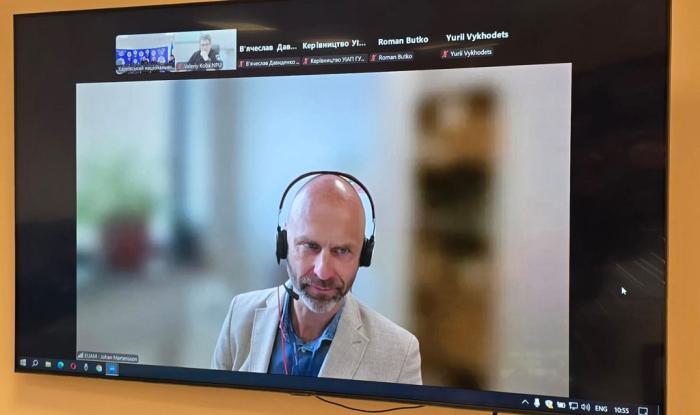
At the initiative of the Ministry of Internal Affairs of Ukraine, the Department of Education, Science and Sports of the Ministry of Internal Affairs, Kharkiv National University of Internal Affairs together with the OSCE Support Program for Ukraine, the International Scientific and Practical Conference “Security in the Cybersphere” was held. The event was held in a face-to-face and remote format and brought together participants from different regions of Ukraine and other countries.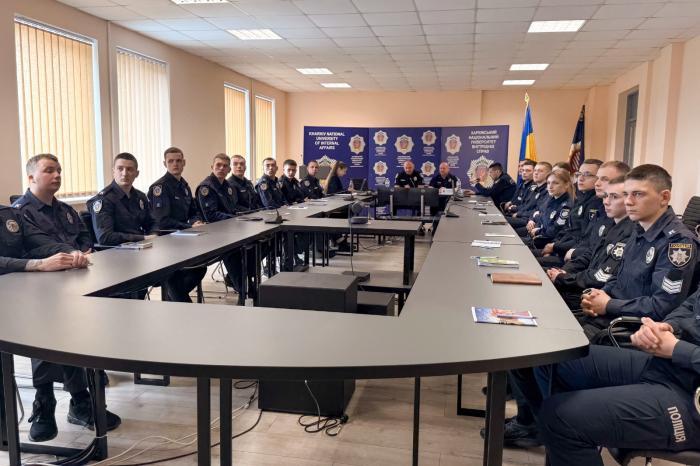
The conference was attended by representatives of the Ministry of Internal Affairs, the National Police of Ukraine, scientists, as well as a wide range of international partners - representatives of the EU Advisory Mission, the OSCE, the International Committee of the Red Cross and delegations from Romania, Sweden, Hungary, Turkey and Moldova. The participants were addressed by the First Vice-Rector of KhNUIA Viktor Vasylenko, Deputy Minister of Digital Transformation Vitalii Balashov, Director of the Department of Education, Science and Sports of the Ministry of Internal Affairs of Ukraine Oleksandr Tarasenko, Head of the Department for Ensuring the Activities of the Head of the National Police Valerii Koba.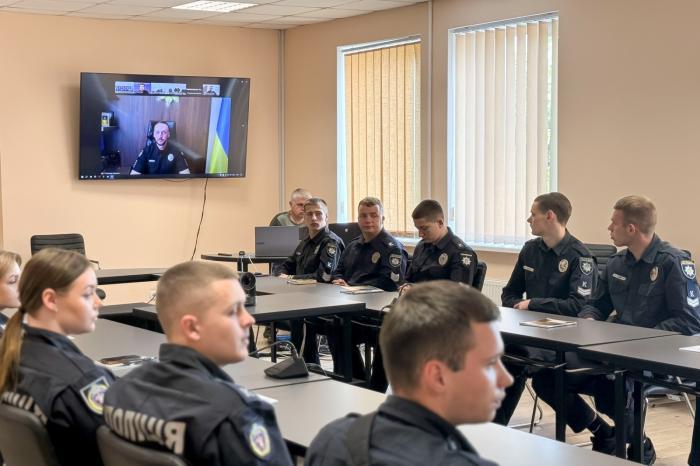
The main focus of the discussion was on the current challenges of cybersecurity in wartime, the use of modern information technologies in investigations, and the need for practice-oriented training of specialists.
Experts emphasized that the digital transformation of law enforcement agencies is a key strategic priority of the security sector. Among the most important innovations was the creation of a Trilateral Cyber Alliance between Ukraine, Romania, and Moldova for the joint exchange of information about threats, as well as the full functioning of the Sectoral Cyber Incident Response Center of the Ministry of Internal Affairs based on the Cyber Police Department..jpg)
During the reports, significant results of the work of law enforcement officers over the past year were announced. The Cyber Police Department provided compensation for over 340 million UAH of losses, and thanks to the implementation of the Anti-Fraud project in the regional departments of the National Police, it was possible to block 145 million UAH of funds of victims of online fraud.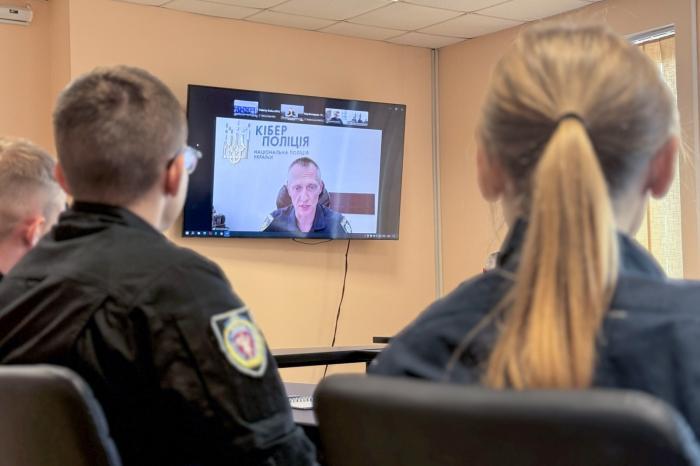
At the same time, the participants discussed the rapid evolution of threats. In particular:
- drug trafficking has almost completely moved into cyberspace using online marketplaces and cryptocurrencies;
- new forms of crime are emerging, such as “violence as a service” (recorded by Swedish law enforcement), which involves recruiting teenagers through messengers to commit crimes;
- the active use of artificial intelligence (AI) allows for the automation of cryptocurrency movement analysis, but creates new risks. Experts emphasized that AI models often “hallucinate” (up to 10% of vulnerabilities detected by them are false), so the role of a highly qualified analyst remains unchanged.1.jpg)
In addition, experts pointed out problems that require urgent solutions: the most vulnerable link remains the human factor (weak passwords, clicking on phishing links), the lack of Ukrainian developments for forensic examination of mobile devices, and legal difficulties with collecting evidence from cloud storage..jpg)
Summing up the conference, the Director of the ERI No. 4 of KhNUIA Mykola Marchuk and other experts called on law enforcement agencies and organizations to implement the concept of "zero trust", strengthen continuous monitoring of networks, comply with cyber hygiene rules during OSINT investigations, and deepen international cooperation, in particular in the field of developing a common artificial intelligence infrastructure for the needs of law enforcement activities.