Kharkiv National University of Internal Affairs has concluded a three-day training seminar on combating human trafficking, organized jointly with a group of experts from the European Union Advisory Mission on Civilian Security Sector Reform in Ukraine.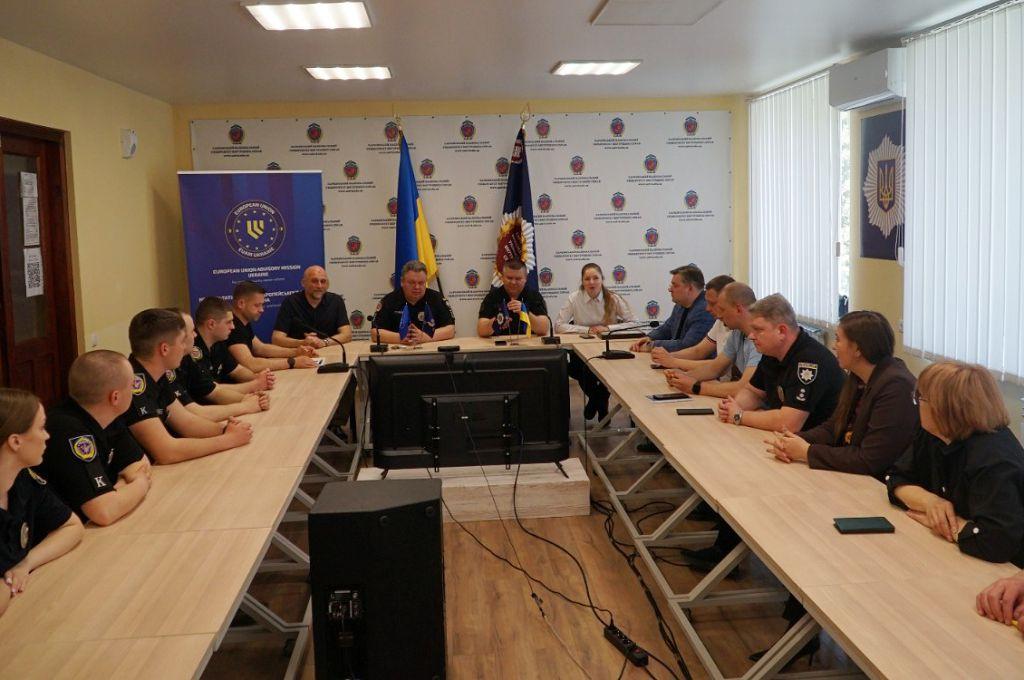
Over the course of three days, faculty and students from Kharkiv National University of Internal Affairs, international experts, as well as representatives of investigative and specialized units of the National Police of Ukraine discussed current scientific, legislative, procedural, and forensic aspects of combating human trafficking.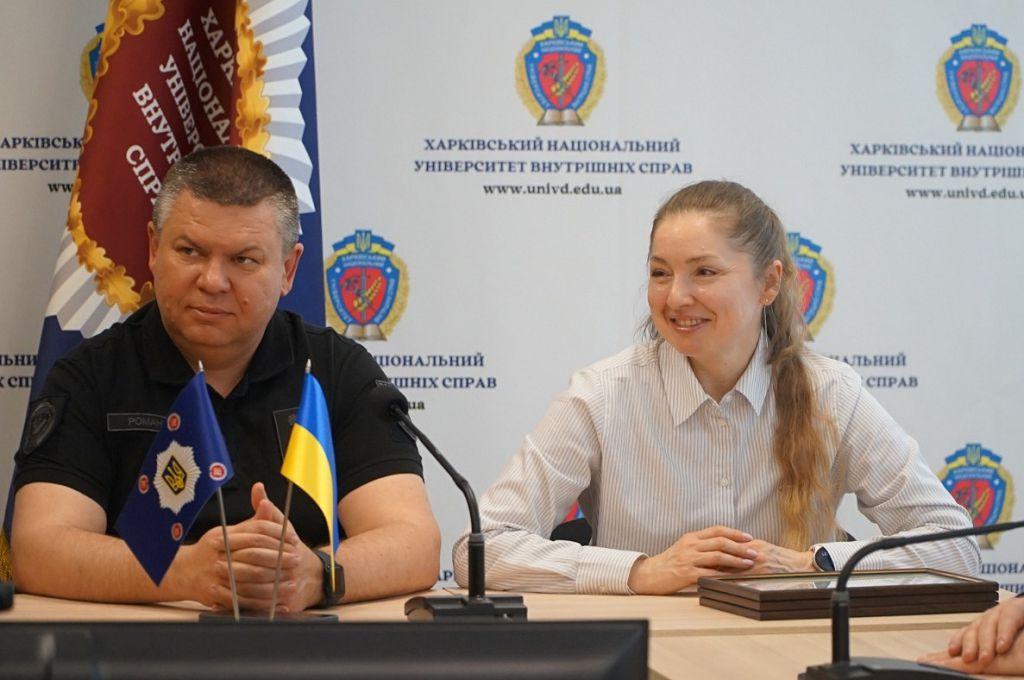
Kyrylo Cherevko, Professor of the Department of Criminal Law and Criminology, delivered a presentation titled “Human Trafficking within the Framework of National Legislation,” while Hennadii Hlobenko, Professor of the Department of Criminal Procedure and Organization of Pre-trial Investigation, highlighted the criminal procedural aspects of investigating such crimes. Oleksandr Manzhai, Head of the Department of Combating Cybercrime, focused on the use of OSINT tools in identifying and investigating cases of human trafficking. Olena Makarova, Professor of the Department of Criminalistics and Forensic Expertise, examined the tactical and psychological aspects of interviewing minor victims and witnesses.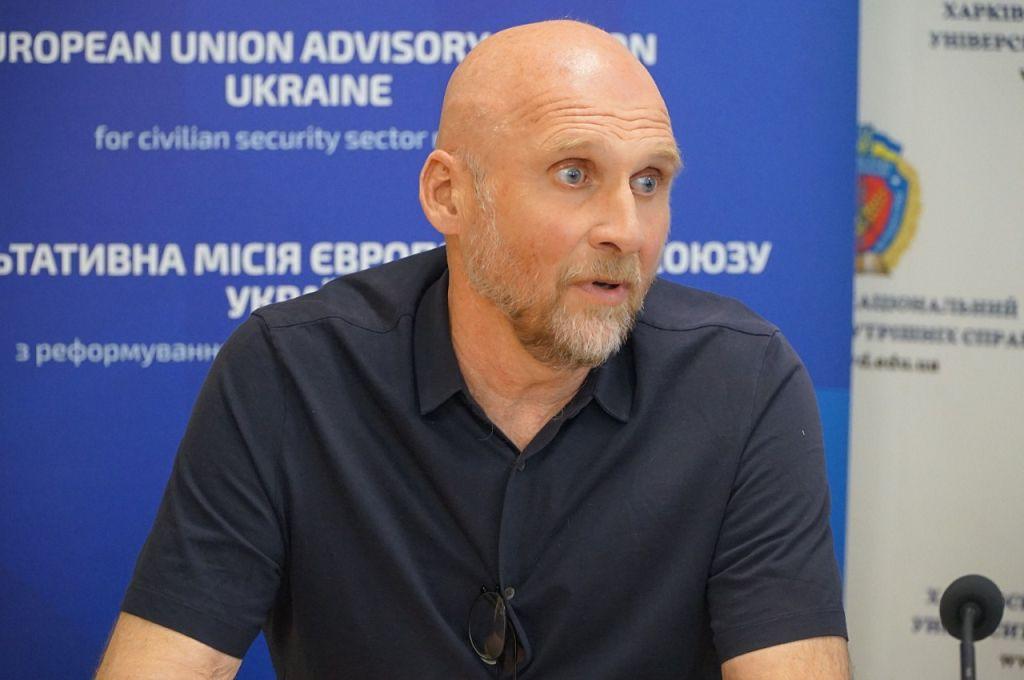
International experts addressed issues related to the protection of victims’ rights, the types and indicators of human trafficking, the connection between this crime and organized crime, as well as the specifics of financial investigations during their documentation. An analysis of practices in EU countries allowed participants to compare international experience with the realities in Ukraine.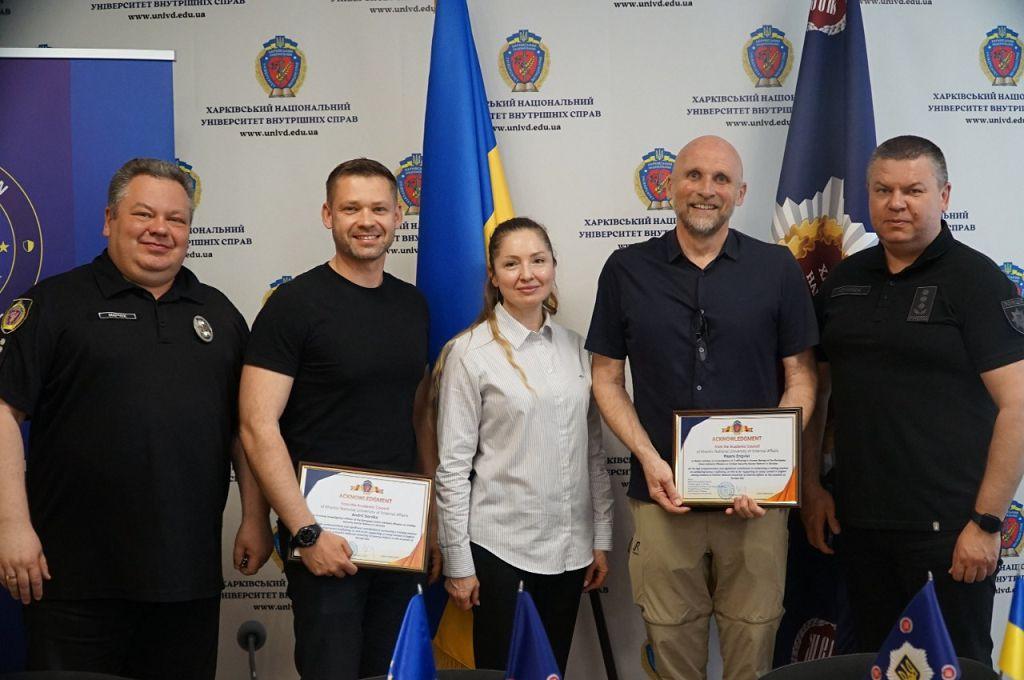
The practical sessions focused on interviewing victims in typical situations. The simulated interviews were conducted by representatives of the Main Department of the National Police in Khmelnytskyi Oblast: Serhii Vasyliev, Deputy Head of the General Criminal Investigation Division, and Ihor Dupliak, an investigator with the Special Crimes Investigation Division. Participants and expert trainers emphasized the importance of a sensitive approach and avoiding psychological pressure to prevent the re-traumatization of victims.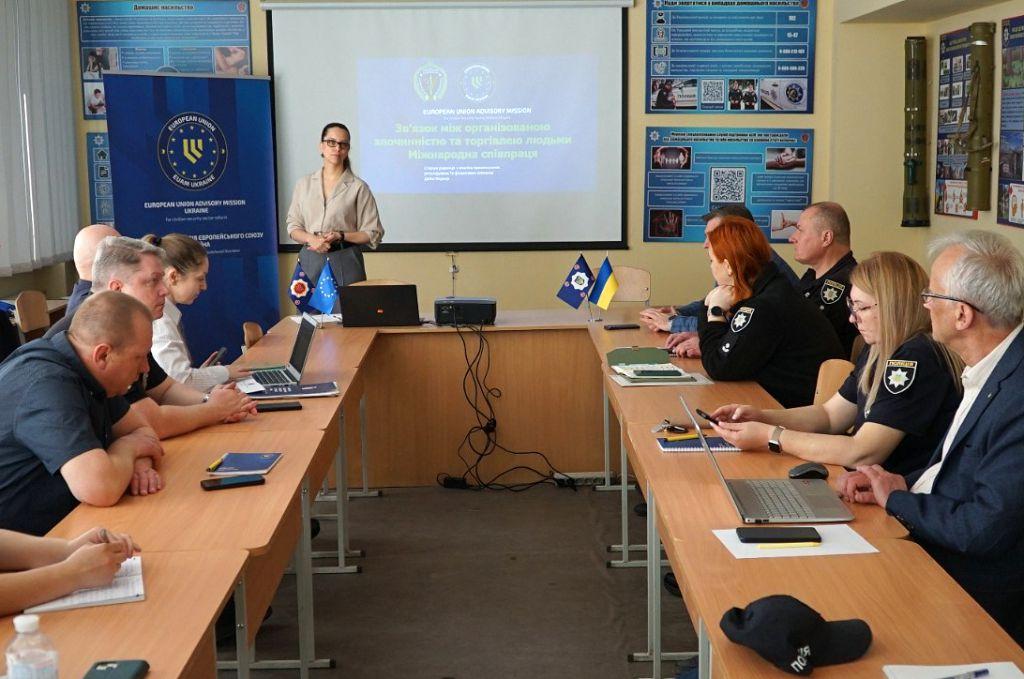
The training was conducted in English, which helped improve the participants’ professional foreign language skills.
During a working meeting with the leadership of the institutions, the results of the cooperation were summarized, and further directions for international collaboration in the educational and scientific spheres were outlined. Certificates were awarded to representatives of the National Police of Ukraine, as well as to staff and cadets of the ERI No. 1 and No. 4 of Kharkiv National University of Internal Affairs.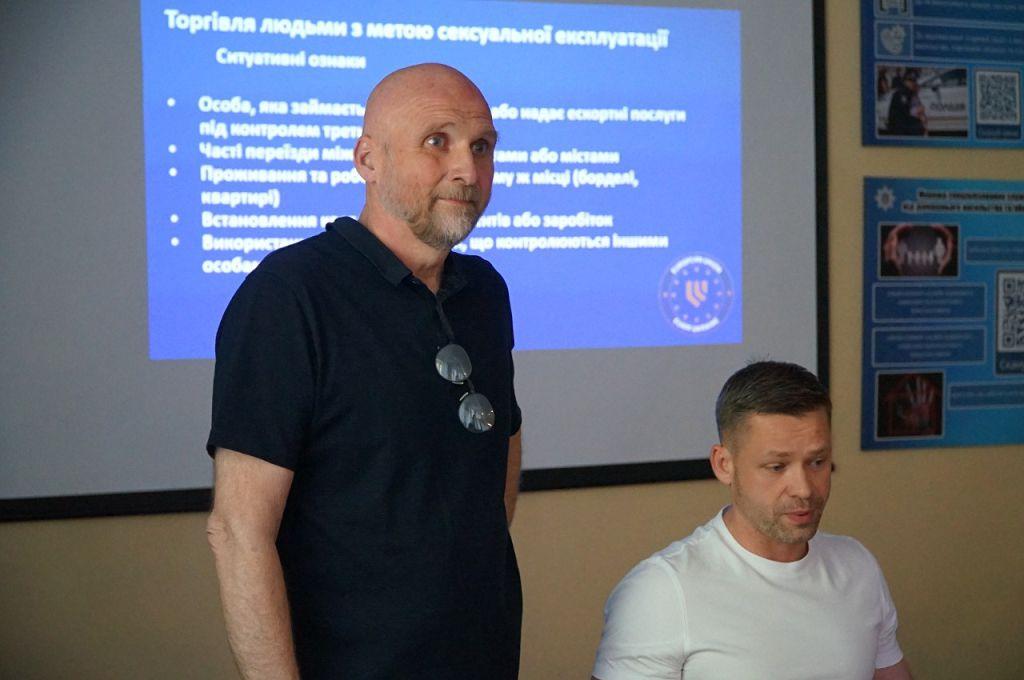
In recognition of their significant contribution to the professional development of Ukraine’s law enforcement personnel, foreign partners were honored with Letters of Appreciation from the Academic Council of Kharkiv National University of Internal Affairs, which were presented by Tetiana Matiushkova, Head of the International Cooperation Department, on behalf of Rector Valerii Sokurenko.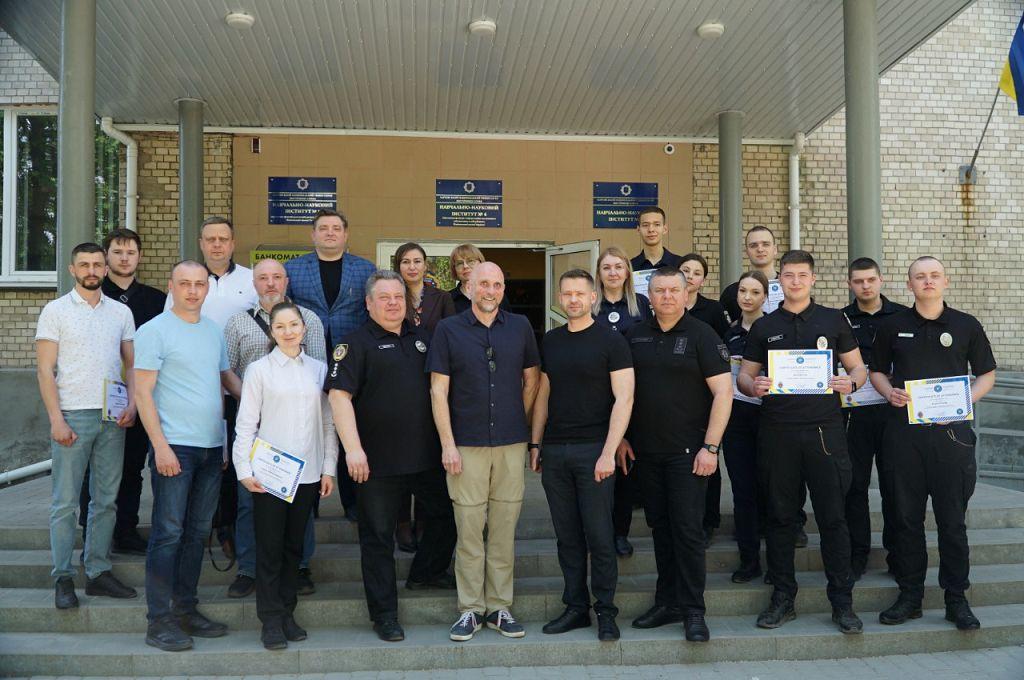
The collaboration between academics, police officers, and international experts helped participants deepen their knowledge, acquire practical skills in combating human trafficking, and exchange professional experience.