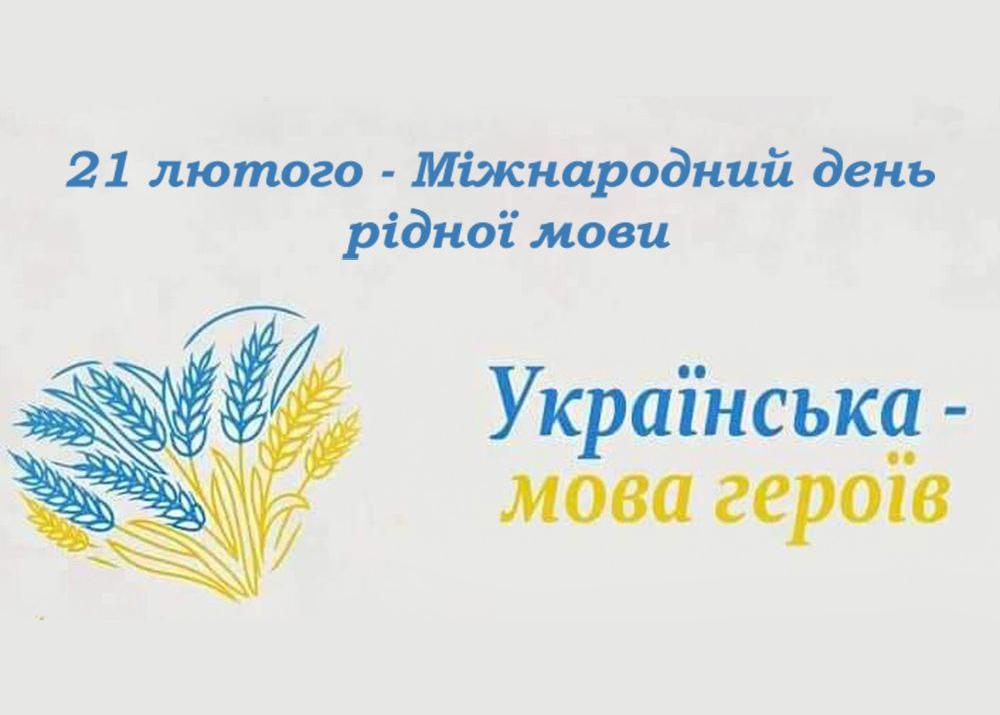
Every year on February 21, the world community celebrates International Mother Language Day. At the XXX session of the UNESCO General Conference, held in 1999 in Paris, a document was adopted on “support for linguistic, cultural diversity and multilingualism”. Such a step provided for the protection of language as the cultural heritage of every nationality around the world.
This holiday, unfortunately, is associated with tragic events. In 1952, the Pakistani authorities proclaimed Urdu, which was the only state language, as the native language of only 3% of the population. On February 21, people demonstrated in Bangladesh to express their protest against the ban on the use of their native language, Bengali. That day, security forces killed several students. After the declaration of independence of East Pakistan, on February 21, the country commemorates those who died for their native language. It was at the suggestion of Bangladesh in 2000 that UNESCO introduced International Mother Language Day.
For each person, the expression of their cultural consciousness is their native language. It serves as a tool for accumulating the experience of previous generations, capturing the customs and traditions of the people, their beliefs and history. Without language, there is no original culture of the nation. Preservation of the native language is the primary task of every conscious citizen. According to experts, there are more than 6,000 languages in the world, and some of them are under threat of extinction. Today, researchers distinguish six such categories: 1) “safe languages” (the process of language transmission from generation to generation is not interrupted); 2) “vulnerable languages” (children communicate in their native language, but not in all families); 3) “the language is definitely under threat” (children do not learn the language as a native language in families); 4) “the language is in danger of extinction” (the older generation speaks the language, parents understand it, but do not speak it); 5) “the language is in critical danger” (only the older generation is the native speaker); 6) “dead language” (there are no native speakers left).
So, the introduction of International Mother Language Day is primarily a protection of cultural diversity, because, according to UNESCO, multilingualism is the key to mutual understanding and mutual respect. The famous Ukrainian writer of the sixties Lina Kostenko wrote: “Nations do not die from a heart attack. First, their language is taken away.” It is enough to ban, destroy the language - and an original people will disappear from the world map.
In Ukraine, this holiday became official in 2002, when the decree “On the celebration of the International Mother Language Day” was issued with the aim of strengthening the state-building function of the Ukrainian language and promoting the free development and use of other languages of national minorities. More than 130 national minorities live on the territory of our country, who are speakers of 79 languages. The list of languages that are threatened with extinction includes Crimean Tatar, Karaite and Krymchatsky - the languages of the indigenous peoples of Ukraine.
This holiday is of particular importance for our country, because for more than one century Ukrainian language was under a total ban. Thus, on July 30, 1863, a secret decree was issued by the Minister of Internal Affairs of the Russian Empire, Potr Valuiev, regarding the publication of religious, educational books and fiction in the Ukrainian (“Little Russian”) language. The Valuev Circular was quite ambiguous, it operated differently throughout Ukraine and became the basis for the Ems Decree. The law signed by Alexander II in 1876 completely banned the use of the Ukrainian language: in everyday life, theater, literature, science, and church. Thus began a linguocide that leads to the loss of historical memory and national identity. The issue of preserving the language became acute with the full-scale Russian invasion of Ukraine. In the occupied territories, the enemy destroys educational institutions, burns Ukrainian books, and kills public activists and artists. Linguocide is a sign of genocide against Ukrainians, so the language policy of our state today provides for a number of measures to strengthen the status of Ukrainian as a state language.
Ivan Malkovich writes: “The peculiarity of our alphabet begins with ANGEL and ends with ANGEL. From A to Z: from angel to angel. They protect our alphabet and language at all stages of our history. There is no such thing in any nation.” So let’s cherish our native language, because it is unique!
Associate Professor of the Department of Humanities and Ukrainian Studies, Candidate of Philological Sciences, Associate Professor Natalia KOBYLKO