On the Day of Remembrance of the Babyn Yar Tragedy, a series of educational and commemorative events was organized for cadets of Kharkiv National University of Internal Affairs (KhNUIA). The events were dedicated to reflecting on the crimes of the Nazi regime and preserving the memory of its victims.
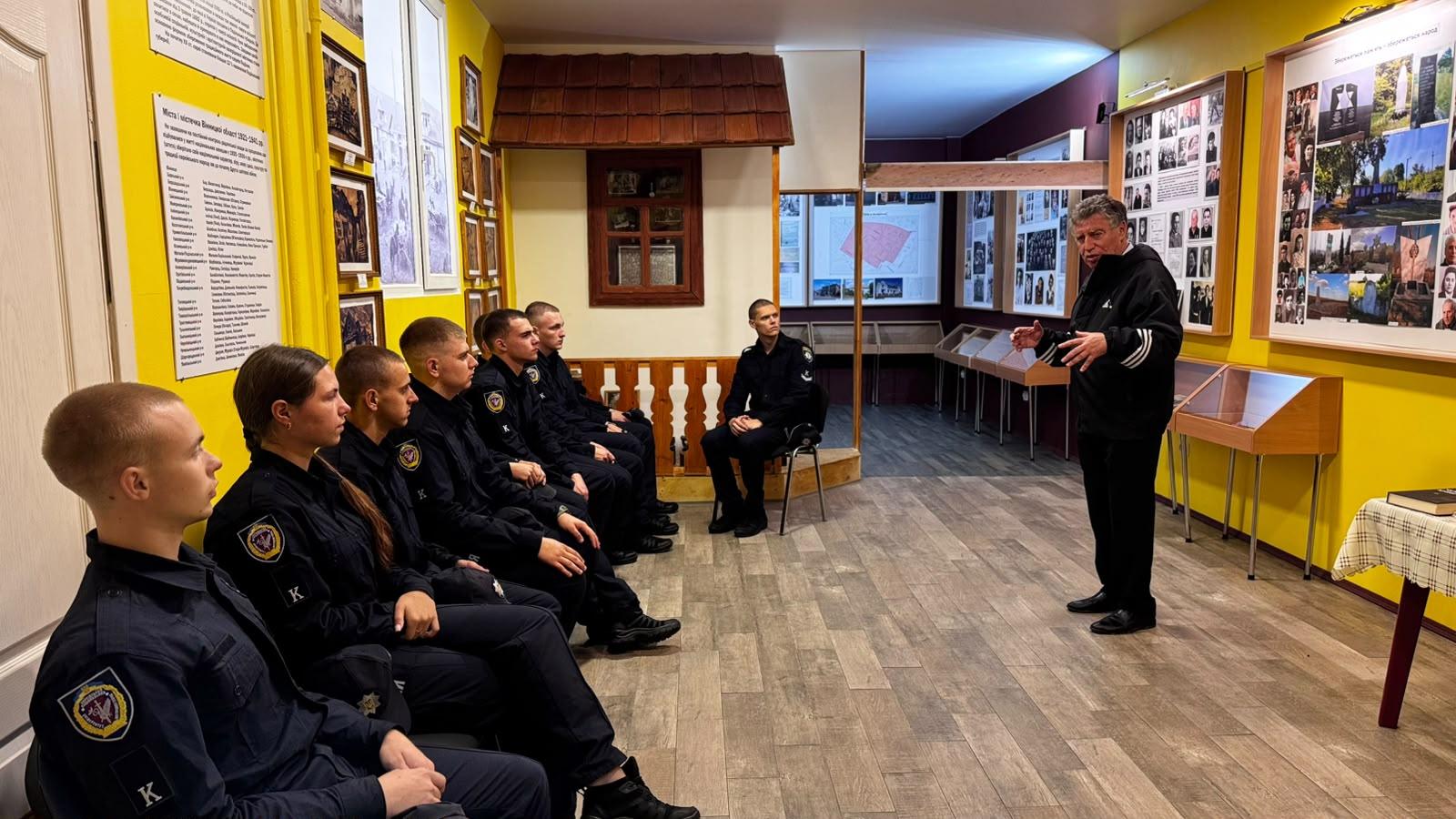
One of the key events was a meeting between cadets and historian Oleksandr Krasian, a staff member of the Department of Ukrainian History at Mykhailo Kotsiubynskyi Vinnytsia State Pedagogical University. During the meeting, he spoke about the events that took place at Babyn Yar after the occupation of Kyiv by Nazi forces, the background and circumstances of the mass executions, as well as the fates of people who became victims of Nazi terror.
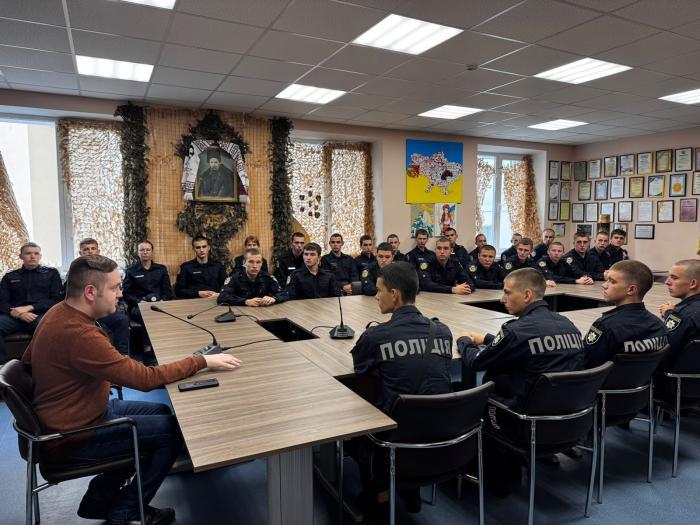
Special attention was paid to eyewitness accounts, archival documents, and other historical sources. The historian emphasized their importance in reconstructing the actual circumstances of the tragedy and countering attempts to distort historical facts. The cadets had an opportunity to ask questions and discuss the responsibility of the future generations in preserving the memory of genocide victims.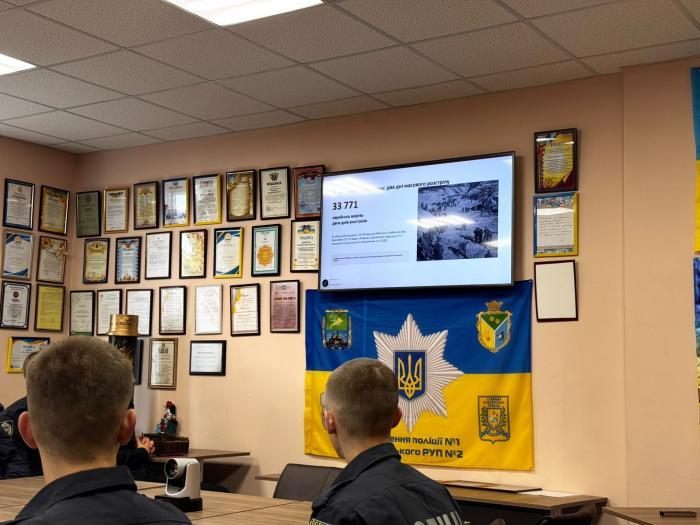
On the same day, the cadets took part in commemorative events in Vinnytsia. A memorial meeting was held near the site of the mass executions of Jews of the Vinnytsia region. The participants honoured the memory of those killed with a minute of silence and laid flowers at the memorial.
 – копія.jpeg)
The event was attended by Director of the Vinnytsia Holocaust Museum, local historian and researcher Leonid Trachtenberg, as well as representative of the Central Interregional Department of the Ukrainian Institute of National Remembrance Oleksii Servetnyk.
.jpeg)
The programme continued with a visit to the Vinnytsia Holocaust Museum. During the thematic guided tour, Leonid Trachtenberg presented documentary materials on the Babyn Yar tragedy, the crimes of the Nazi regime, and tragic pages of the history of the Vinnytsia region. Documents, photographs, and personal stories allowed the cadets to understand the scale of the tragedy through individual human experiences and historical evidence.